Symposium A-3
Materials Science of Electride and Floating Electron System
Scope
Electrides are materials in which electrons serve as anions. This material concept was proposed in 1982 along with an organic example.  While the concept was totally novel but almost no materials research had been advanced due to extremely high sensitivity to temperature and ambient atmosphere. This obstacle was solved by realization of inorganic electride in 2003. Since then, science and application of electride has advanced a lot in various aspects: electride material is extended in several respects: from ionic crystals to intermetallic compounds in host materials, from crystalline to amorphous solids, and from 0-dimensional to 1- and 2-dimensional materials in electron-confined spaces. In particular, 2D electrides, in which anionic electrons are sandwiched by cationic slabs, can form a bulk crystal of a 2-dimensional electron gas, thus exhibiting a large electron mobility and providing a platform for topological materials. 2D electride, leading to a concept of electrene, monolayer electride, which bridges to the floating electron systems such as alkali intercalated graphene and MXen with intriguing properties.
Exploration of new electrides by computation combined with high pressure synthesis is now rapidly advancing, revealing that an electride is a stable equilibrium phase of many elements and compounds under high pressure.
 These scientific studies have unveiled the intrinsic properties of electride and related materials. Low work function is a representative property of these systems originating from no nucleus for anionic electron. This property is utilized for various applications, chemistry such as catalyst and electrochemistry, electronics as electron emitter. It is revealed that anionic electrons induce ferromagnetism, superconductivity and large non-linear optical nonlinearity.  2D-electride is now attracting as the electrode for secondary battery.
  Thus, this is a good timing to have a first symposium focused on electride and floating electron system by gathering the researchers globally.  The objective of this symposium is to provide a forum to present recent advances on science and application and discuss toward further development of this topics.
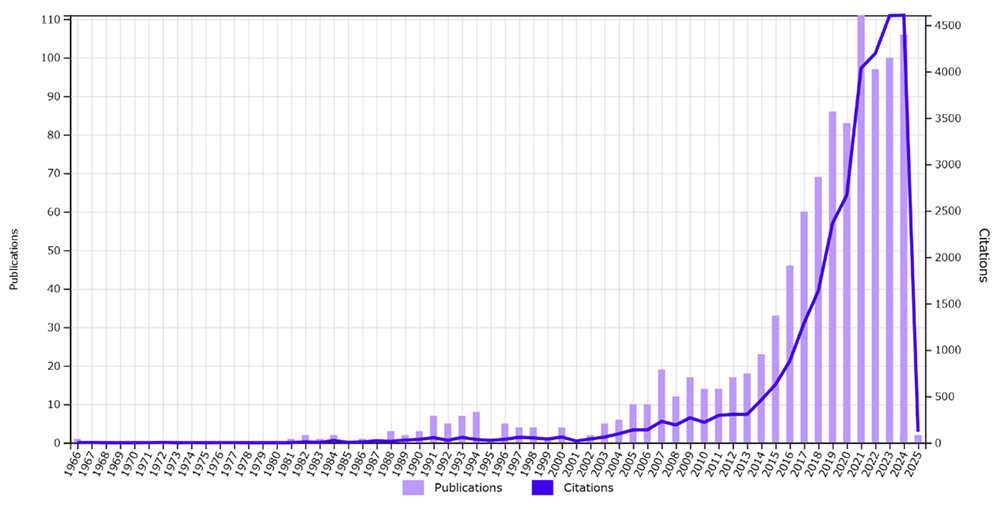
  Statistics:  electride
Topics
- Nanomaterials and Quantum Materials
- Materials Innovations with Materials Informatics
- Fundamentals, Materials Theory, Computing, and Data Science
Invited Speakers
- Tian-Nan Ye, Shanghai Jiao Tong University: Amorphous Pathways for Oxide-Based Electride Synthesis: A General Strategy to Bypass Thermodynamic and Kinetic Limitations
- Dmitry Novoselov, Institute of Metal Physics: Many-Body Effects and Intrinsic Magnetism in Electrides
- Samuel Weaver, University of North Carolina Chapel Hill: Electron Counts and Dimensionalities in Electrides
- Erli Lu, University of Birmingham: Mechanochemical Synthesis of Alkali Metal Room-temperature Stable Electrides (RoSEs)
- Yansun Yao, University of Saskatchewan: Unveiling Sodium’s Elusive tI50 Phase: A High-Pressure Body -Centered Tetragonal Electride
- Yuta Tsuji, Kyushu Univ.: Exploration and Characterization of Electrides in Lithium-Rich Compounds
- Zhiqi Wang, Northwestern Polytechnical University: Intelligent Design of A2BC2 Electrides: Enabling Thermocatalytic Ammonia Synthesis and Electrocatalytic Hydrogen Evolution Reaction
- Jack Hemingway, Newcastle University: Structural Determination of Mechanochemically Synthesized Alkali Metal Containing Electrides
- Shuyuan Liu, Hanyang University: Weyl fermions and magnetic anisotropy in 2D layered ferromagnetic electride Gd2C
- Lee A Burton, Tel Aviv University: Assessing the design rules of electrides
- Joongjai Panpranot, Chulalongkorn University: Highly efficient room-temperature conversion of CO2 to CQDs using electride electrodes
- Jesse Maassen, Dalhousie University: Weak Electron-Phonon Coupling in Layered Electrides
- Yunwei Zhang, Sun Yat-sen University: Development of novel superconductivity with higher Tc via the suppression of magnetism in quasi-two-dimensional electride Y2C under high pressures
- Satoru Matsuishi, National Institute for Materials Science: Theoretical Study of Phase Stability and High-Pressure Structural Phase Transition of Mayenite-type Electrides
- Hongming Weng, Insitute of Physics, Chinese Academy of Sciences: Topological Material Database and Machine Learning on It
- Zhijun Wang, The Institute of Physics, Chinese Academy of Sciences: Application of topological quantum chemistry in electrides and unconventional materials
- Yeongkwan Kim, Korea Advanced Institute of Science and Technology: Correlated and topological surface states formed at the edge of electride
- Fabrizio Ortu, University of Leicester: Alkaline earth electrides: a new weapon in the synthetic arsenal
- Junjie Wang, Northwestern Polytechnical University: The Dual Role of Interstitial Electrons in the Magnetic Properties and Structural Stability of Electrides
- Miaofang Chi, Oak Ridge National Lab and Duke U: Emerging Electron Microscopy for Probing Anionic Electrons and Charge-Driven Structural Dynamics
- Jiazhen Wu, Southern University of Science and Technology: Surface Optimization of Intermetallic Electrides for Improved Ru Dispersion and Enhanced Ammonia Synthesis
- Eduard Matito, Donostia International Physics Center.: Quest for Building Blocks to Design Transition Metal Electrides
- Ruijuan Xiao, Institute of Physics, Chinese Academy of Sciences: Discovery of New Battery Materials based on Big Data Approach
- Hiroki Ikegami, Institute of Physics, Chinese Academy of Sciences: Floating Electrons on Liquid Helium and Solid Neon
- Tomofumi Tada, Kyushu Univ.: First principles exploration and characterization for inorganic electride
- Huiyang Gou, Center for High Pressure Science and Technology Advanced Research : Electrides Under Pressure
- Hechang Lei, Renmin University of China: Superconductivity In Novel Electride Materials
- Long Zhao, Xi'an Jiaotong University: Electride induced phase transition in alkali metal under high pressuresElectride induced phase transition in alkali metal under high pressures
- MOTOAKI HIRAYAMA, RIKEN: Materials Design for Topological Electrides
- Sung Wng KIM, Sungkyunkwan University: Electrides for quantum electron phases
Organizers
- Representative
Hideo Hosono - Institute of Science Tokyo/NIMS
- Correspondence
Satoru Matsuishi - National Institute for Materials Science
MATSUISHI.Satoru[at]nims.go.jp
- Gian-Marco Rignanese
- FRS-FNRS / UCLouvain, Belgium
- Sung-Wng Kim
- Sungkyunkwan University, Korea
- Junjie Wang
- Northwest PolyTechnic University, China
- Scott Warren
- North Carolina University, Chapel Hill, US